Flash / SSD Storage Servers
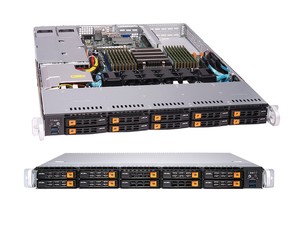 Our All-Flash/SSD Storage Systems utilize all SSD (Solid State Disk), with no moving parts. The speed of flash storage is how got its name: It writes data and performs random I/O operations "In a Flash".
eRacks' All-Flash aka SSD Storage Systems are based on solid-state technology, (ie, it has no moving/rotating parts). When flash technology is used for enterprise storage, the term flash drive or flash array is often used interchangeably with "SSD" (solid-state drive or disk). In contrast to SSDs, HDD storage relies on spinning disks, motors, and read/write heads, using magnetic media to store data on a rotating platter, which is subject to physical failure.
 Flash Storage in the Data Center
All-Flash/SSD Storage Systems offer unique benefits to enterprises that are grappling with exploding data volumes and slow, unpredictable data access. As all-flash storage solutions become increasingly affordable relative to spinning disk, enterprises can now realize flash benefits at scale, including:
- Accelerated application performance: The speed of flash enables customers to access information faster and more effectively. It frees IT staff to focus more on strategic business goals and less on unplanned fire drills. And it empowers the business to capitalize on new opportunities, outcomes, and markets with increased productivity and faster time to market. All-Flash/SSD based Storage Systems can accelerate common enterprise applications, such as Oracle Database, MS-SQL, SAP, and VDI, as well as big data analytics such as Hadoop and NoSQL databases.
- Improved data center economics: With the development of high-density flash technologies, our all-flash storage solutions offer faster performance and higher capacity in a fraction of the data center footprint. As their data volumes continue to grow, enterprises can see significant cost savings over time from simplified management and a reduction in space, power, and cooling costs.
- Future-proof infrastructure: Modernizing your data center with flash is a critical step in digital transformation, but it's important to choose a flash system that supports changing business needs. Not all flash solutions are created equal. All-flash systems that offer nondisruptive scale-out make it possible to start small and grow big. Flash storage that is NVMe-ready can also help future-proof your infrastructure for new technologies and eliminate costly and disruptive forklift upgrades. If your IT strategy calls for a potential cloud element down the road, a flash system that supports cloud integration gives you maximum flexibility for the future.
- Most Flexibility: With the industry’s most cloud-integrated all-flash storage and the most flexibility to support new flash technologies, NetApp makes it easy for you to take advantage of innovations in flash without disrupting your business.
Future of All-Flash/SSD Storage Systems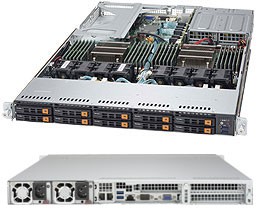
Historically, SSDs have been designed to fit in the same I/O interface as a hard disk drive (HDD), such as the SATA and the SAS interface, to connect to the host computer. Although most SSDs today use 3D TLC NAND-based flash memory, rapid developments in Non-volatile Memory Express (NVMe), NVMe over Fabrics (NVMe-oF), and storage-class memory (SCM) technologies offer tremendous potential in the data center.
NVMe is an interface protocol for accessing flash storage via a PCI Express (PCIe) bus. Unlike traditional all-flash architectures, which are limited to a single, serial command queue, NVMe supports tens of thousands of parallel queues, each with the ability to support tens of thousands of concurrent commands.
NVMe-oF is a host-side interface into storage systems that extends many of the relevant NVMe capabilities over a remote direct memory access (RDMA) or Fibre Channel fabric. With NVMe-oF, it is possible to scale out to large numbers of NVMe devices, even over distances.
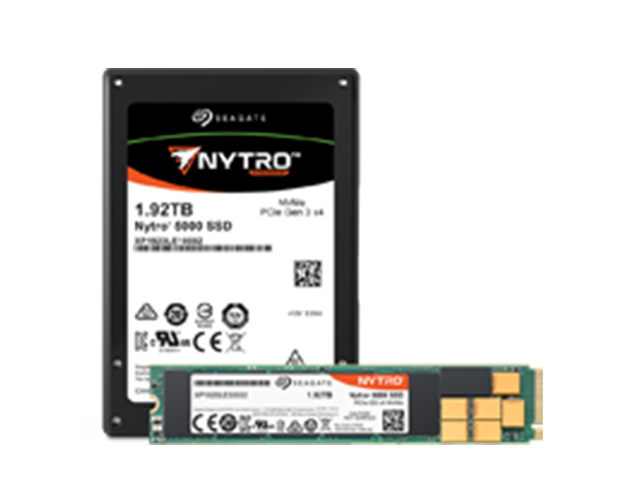 SCM, also known as persistent memory (PMEM), is a new type of media technology that is blurring the line between memory and storage because it can be used as either. Examples of SCM include Intel’s 3D XPoint and Samsung’s Z-NAND media.
When broadly deployed, NVMe and NVMe-oF, especially in combination with SCM, can dramatically accelerate a new generation of applications, delivering 10x lower latency and maximum IOPS.
NetApp was the first to market with high-capacity 15TB SSDs based on 3D NAND technology. It is now leading the future of flash with a powerful vision of integrating the new flash storage systems based on NVMe, NVMe-oF, and SCM into the existing infrastructure nondisruptive.
The eRacks Systems’ highly experienced system specialists could help you to reduce costs by providing CPU, GPU, and FPGA All-Flash/SSD Storage based servers on-demand, optimized for specific applications, and without the need for large capital investments. For help please contact us directly.
If you need specific “All-Flash/SSD Storage System” that is not displayed at our showroom, please contact us directly via phone call on +1 408-455-0010 or Email us at contact@eracks.com . We’ll get back to you with your desired system.
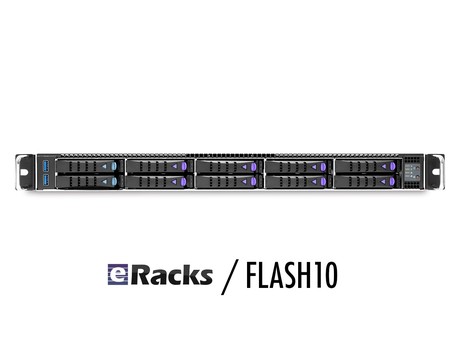
eRacks/FLASH10
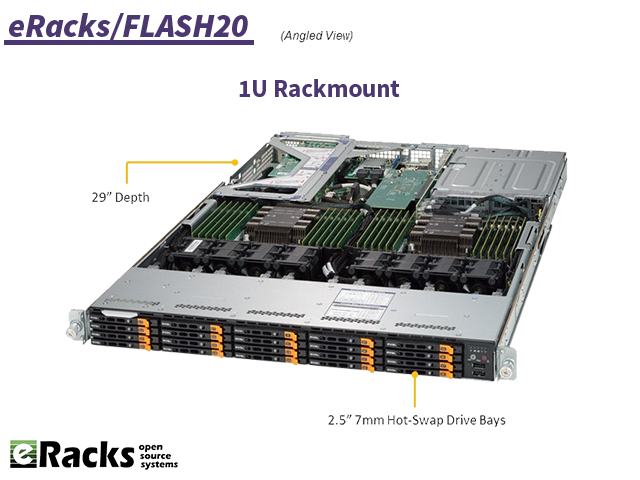
eRacks/FLASH20
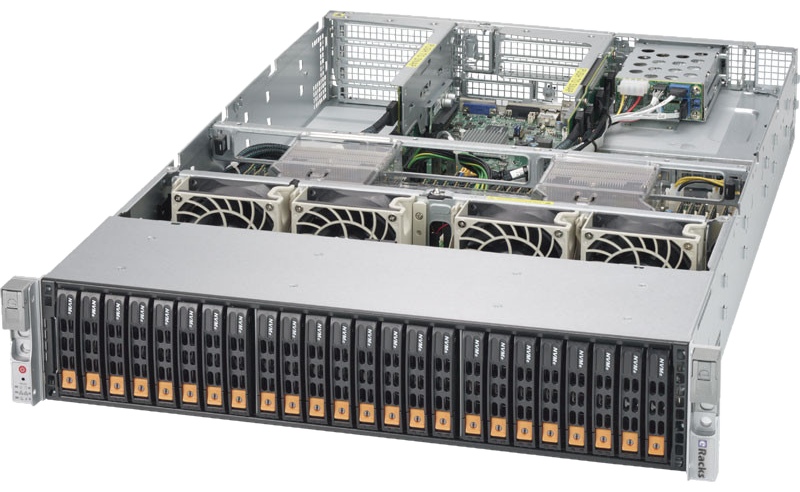
eRacks/FLASH24
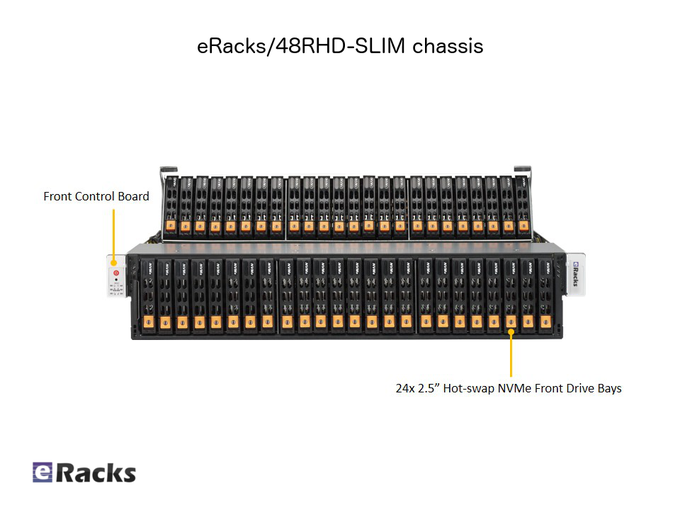
eRacks/FLASH48
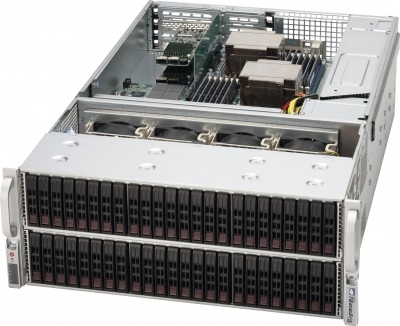
eRacks/FLASH72
Contact Us
 via Telegram
 via SMS Text Message
 via WhatsApp
 via Facebook Messenger
 via Instagram DM (Direct Message)
 via Signal
 eRacks Open Source Systems
©1999-2026 all rights reserved.
Powered by eRacks
|
Privacy & Legal
|
Warranty & Order Policies
eRacks Open Source Systems
©1999-2026 all rights reserved.
Powered by eRacks
|
Privacy & Legal
|
Warranty & Order Policies